What Drives Safety Advocate: The Principles Behind Everything We Build

Raph Hamelain • January 29, 2026

This blog post is for informational purposes only, explaining the Safety Advocate Program. It is not legal advice or compliance guidance.

At Safety Advocate, we like to keep things simple: people first, stress less, and safety made doable. If you've ever felt overwhelmed by training, compliance, or keeping everyone on the same page, you're in the right place. Here's what guides every tool, update, and idea we bring to the table.

1. We Keep Workers Safe—Always

Safety isn't a box we check; it's the reason we exist. Whether your team is on a job site, in a shop, or out in the field, they deserve to feel confident and protected. Every feature we create—from training modules to daily inspections—is built with one question in mind: Will this help someone get home safe today?

2. OSHA Compliance Without the Headache

Let's be honest—OSHA rules can feel like alphabet soup. We get it. So we break everything down into clear, practical steps that actually fit your workflow. No confusing jargon, no endless searching. Just what you need to stay compliant without losing your sanity.

3. Value You Can Feel in Your Day-to-Day

If it doesn't make your life easier, we don't build it. Our goal is for you to look at Safety Advocate and think, "Wow, this actually helps." Simple tools, helpful support, and a program that earns its place in your routine—that's our promise.

4. Enterprise-Grade Safety That Doesn't Break the Bank

High-quality safety shouldn't be reserved for big companies with big budgets. We believe every business deserves strong training, tracking, and reporting tools. That's why we deliver enterprise-level features at a price that makes sense for small and growing teams too.

5. Smart Tech, Built for Real Work

We love technology—but only when it solves real problems. Our platform, app, and program updates are designed to save you time, keep things organized, and move with your industry. No fluff, just smart, practical innovation that works the way you do.

This is what drives us: protecting people, simplifying safety, and giving you tools that genuinely help. Thanks for being part of the Safety Advocate community—there's a lot more good stuff coming your way.

This is what drives us: protecting people, simplifying safety, and giving you tools that genuinely help. Thanks for being part of the Safety Advocate community—there’s a lot more good stuff coming your way.

This blog post is for informational purposes only, explaining the Safety Advocate Program. It is not legal advice or compliance guidance.
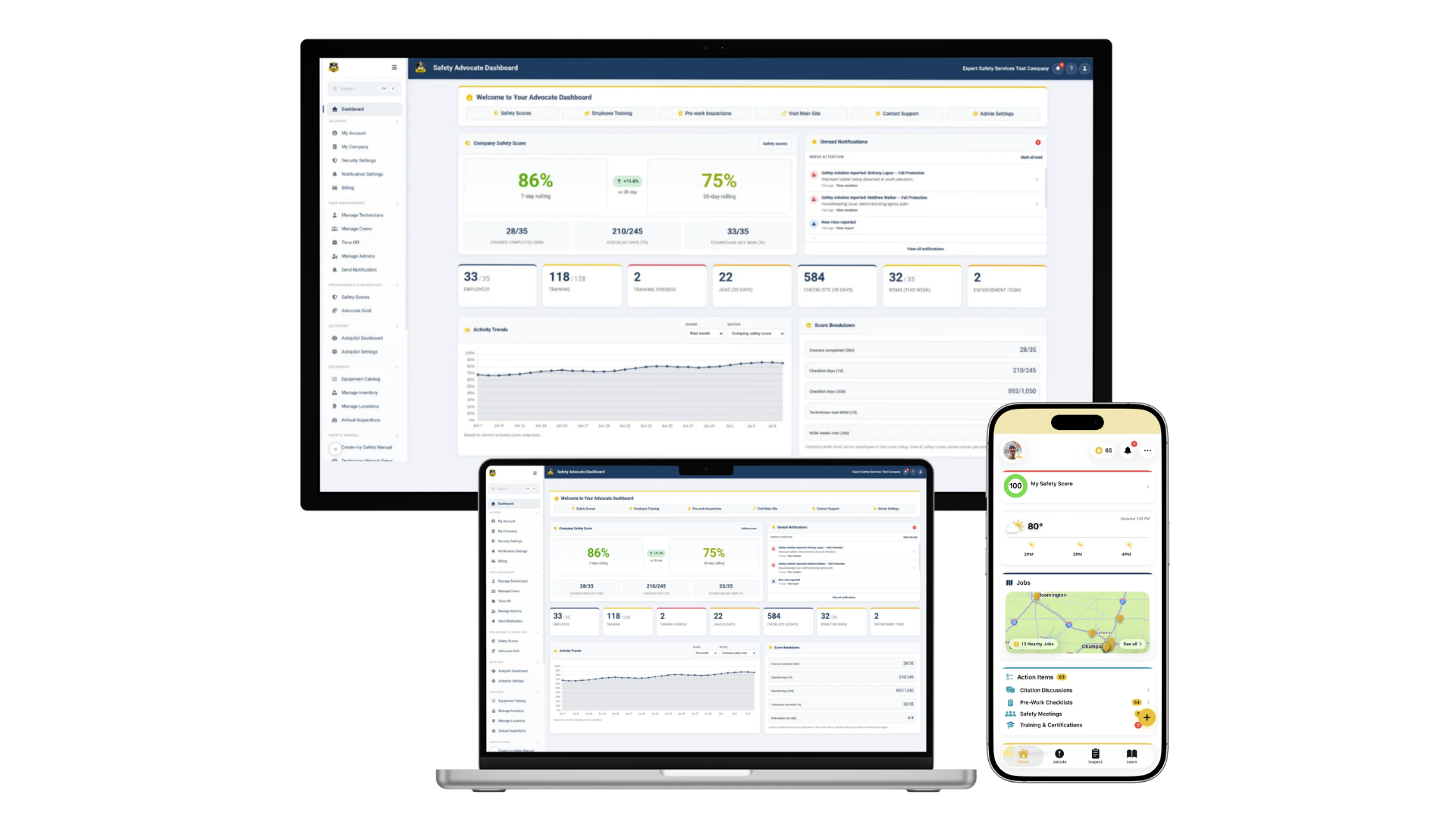
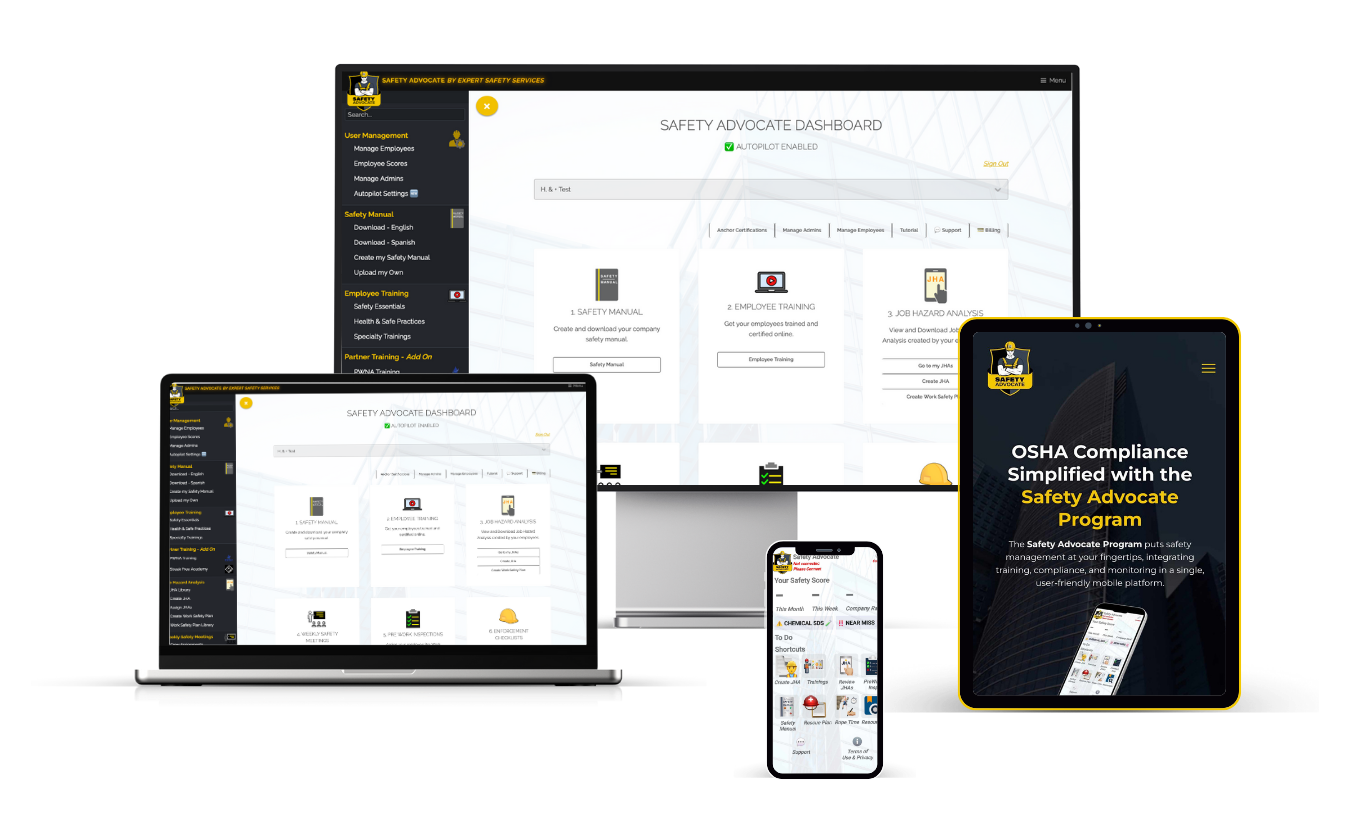
A laptop , tablet , and phone are displayed on a white background.

Contact us today to learn more about the Safety Advocate Program.


Contact Us

Featured Articles

This blog post is for informational purposes only, explaining the Safety Advocate Program. It is not legal advice or compliance guidance.
By Raph Hamelain June 16, 2026
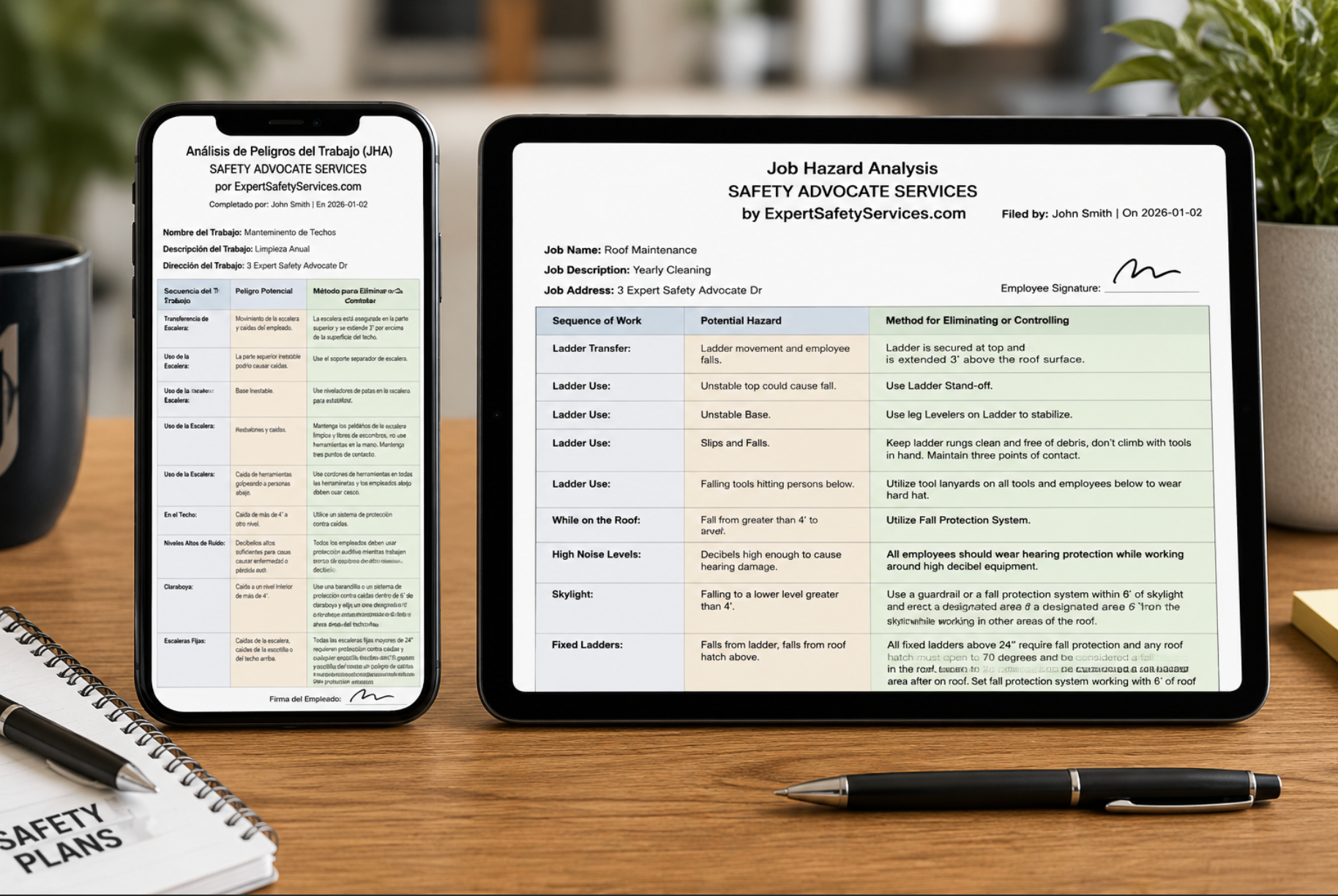
TL;DR: Jobsite Hazard Communication  Jobsite Hazard Communication is the practical process of identifying hazards, assessing risks, and clearly communicating controls to the entire team before work begins. It includes two key tools: the Job Hazard Analysis (JHA) for everyday jobs and the Work Safety Plan for larger or higher-risk projects. Done right, it prevents many accidents, meets OSHA requirements, and turns planning into shared understanding. Most accidents don’t come out of nowhere. They happen when a hazard meets a team that didn’t see it coming—or wasn’t clearly told how to handle it. Jobsite Hazard Communication stops that by identifying risks early and making sure every crew member understands the plan. It’s one of the highest-return safety habits you can build—and it’s the third pillar because it turns your safety manual and training into real-world action.
By Raph Hamelain June 16, 2026
TL;DR: Online Training & Certification Effective online training turns OSHA requirements into practical knowledge that sticks. It covers essential topics like hazard recognition and PPE use, tracks completion for compliance, and fits into busy schedules - helping you r team stay certified, confident, and safe without disrupting the workday. Many teams struggle with training that feels like a chore: long sessions, forgotten details, or schedules that never align. Paper certificates get lost and keeping everything current on certifications can turn into a constant headache. That's why Online Training & Certification is the second pillar - it focuses on making learning flexible, relevant, and something that your crew actually completes and remembers.
By Raph Hamelain June 16, 2026
TL;DR: The Safety Manual  A good safety manual isn't just paperwork—it's the foundation of your safety program's success. It outlines clear policies, meets key OSHA requirements (like written plans for hazards and emergencies), and helps everyone on your team stay safe and consistent. Keep it simple, accessible, and up-to-date for real impact.
By Raph Hamelain February 22, 2026
TL;DR: The 6 Pillars of Safety The 6 Pillars of Safety form a practical framework for strong programs: a clear manual, flexible training, Job Hazard Analyses (JHAs), weekly meetings, PPE inspections, and fair enforcement. Together, they make protection consistent and built into daily routines for teams in high-risk trades like solar panel cleaning, window washing, and pressure washing. If there’s one thing clear from real teams in the field, it’s this: safety works best when it’s simple, consistent, and part of the daily routine. That’s the idea behind the 6 Pillars of Safety—six interconnected tools that address common challenges and create a complete, proactive program. Let’s break down each pillar.
By Raph Hamelain January 9, 2026
 Welcome to the Blog