Pillar 3: Jobsite Hazard Communication — Catching Risks Before They Catch You
Raph Hamelain • June 16, 2026
This blog post is for informational purposes only, explaining the Safety Advocate Program. It is not legal advice or compliance guidance.
TL;DR: Jobsite Hazard Communication
Jobsite Hazard Communication is the practical process of identifying hazards, assessing risks, and clearly communicating controls to the entire team before work begins. It includes two key tools: the Job Hazard Analysis (JHA) for everyday jobs and the Work Safety Plan for larger or higher-risk projects. Done right, it prevents many accidents, meets OSHA requirements, and turns planning into shared understanding.
Most accidents don’t come out of nowhere. They happen when a hazard meets a team that didn’t see it coming—or wasn’t clearly told how to handle it. Jobsite Hazard Communication stops that by identifying risks early and making sure every crew member understands the plan.
It’s one of the highest-return safety habits you can build—and it’s the third pillar because it turns your safety manual and training into real-world action.
Why Jobsite Hazard Communication Matters
In trades like solar panel cleaning, window washing, and pressure washing, conditions change quickly—new sites, weather, equipment, or scope. Without clear communication of hazards and controls, even well-trained teams can miss critical details.
This pillar brings two complementary tools together:
- Job Hazard Analysis (JHA) — Used for most daily jobs to quickly identify risks and controls.
- Work Safety Plan — Used for larger, more complex, or high-rise jobs where additional detail is needed (e.g., emergency access, evacuation routes, or coordination with building security).
Together, they ensure everyone starts the job with the same clear picture of risks and how to manage them.
The Job Hazard Analysis (JHA)
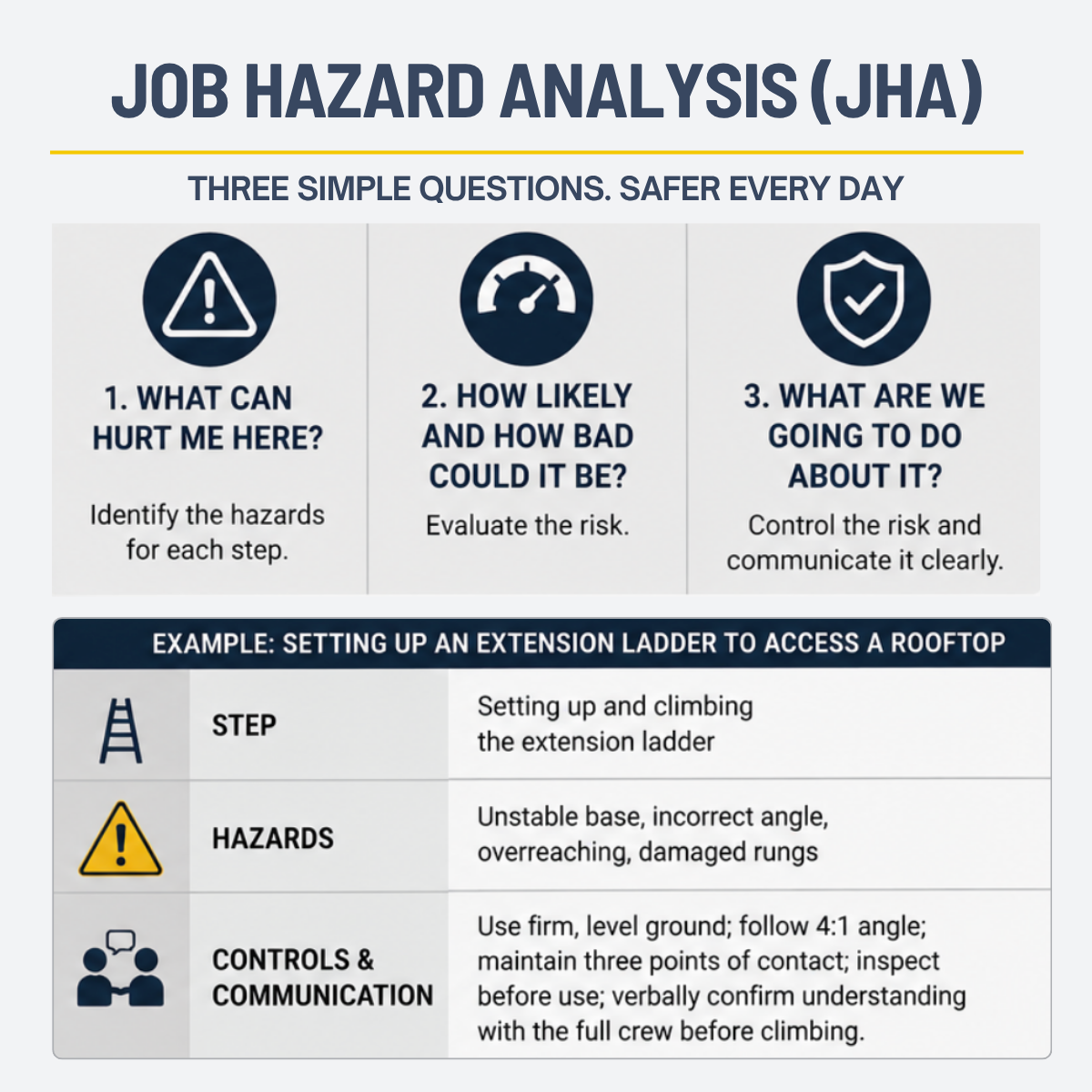
A strong JHA is usually prepared by a qualified person (supervisor, safety coordinator, or estimator) during bidding or planning. It breaks the job into steps and answers three simple questions for each:
- What can hurt me here?
- How likely and how bad could it be?
- What are we going to do to eliminate or control it—and how will we communicate this to everyone?
Example: A crew setting up a ladder to access a rooftop might list:
- Step: Setting up and climbing the extension ladder
- Hazards: Unstable base, incorrect angle, overreaching, damaged rungs
- Controls & Communication: Use firm, level ground; follow 4:1 angle; maintain three points of contact; inspect before use; verbally confirm understanding with the full crew before climbing.
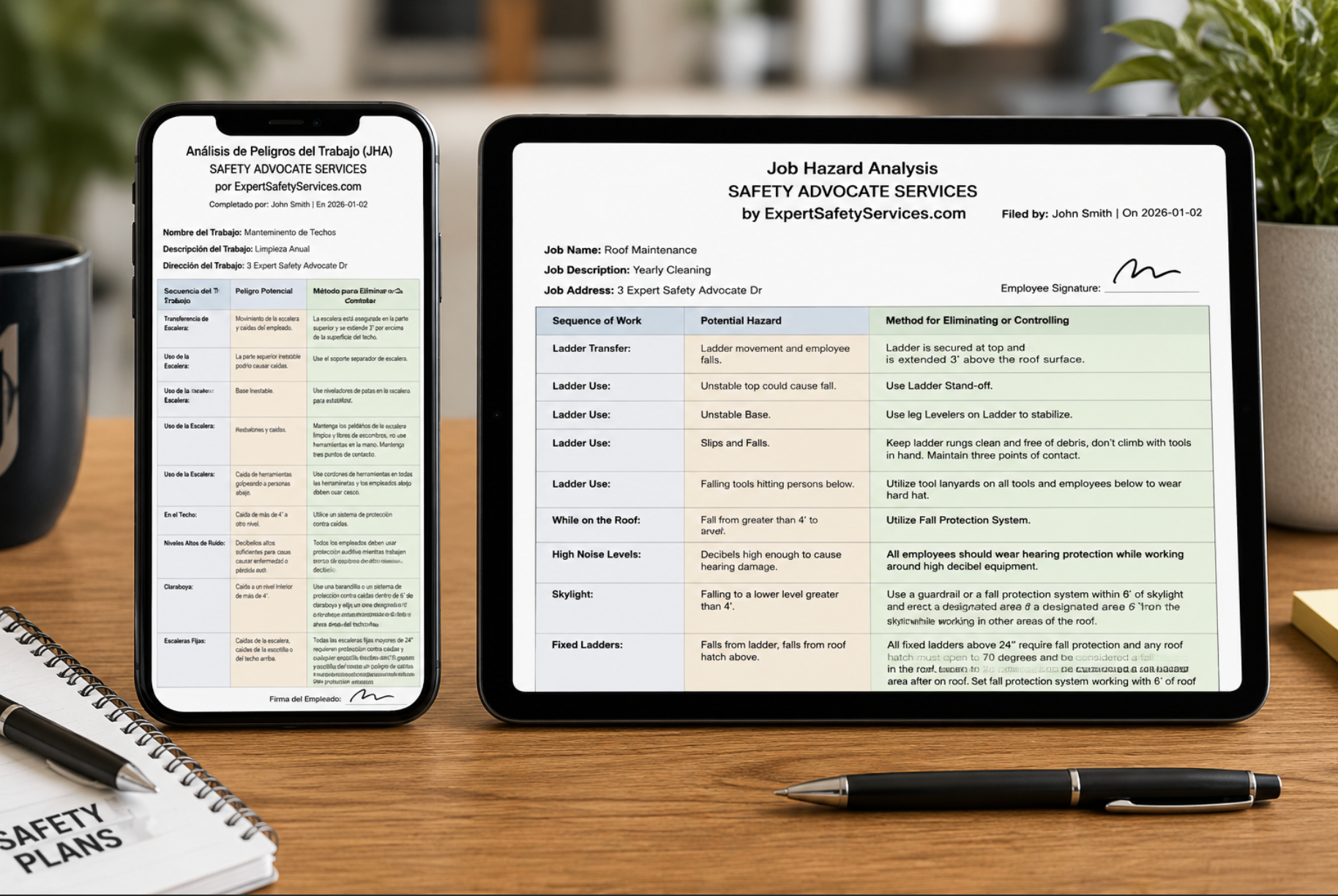
JHAs are straightforward, fit on one phone screen, and are reviewed together on site before work starts.
The Work Safety Plan
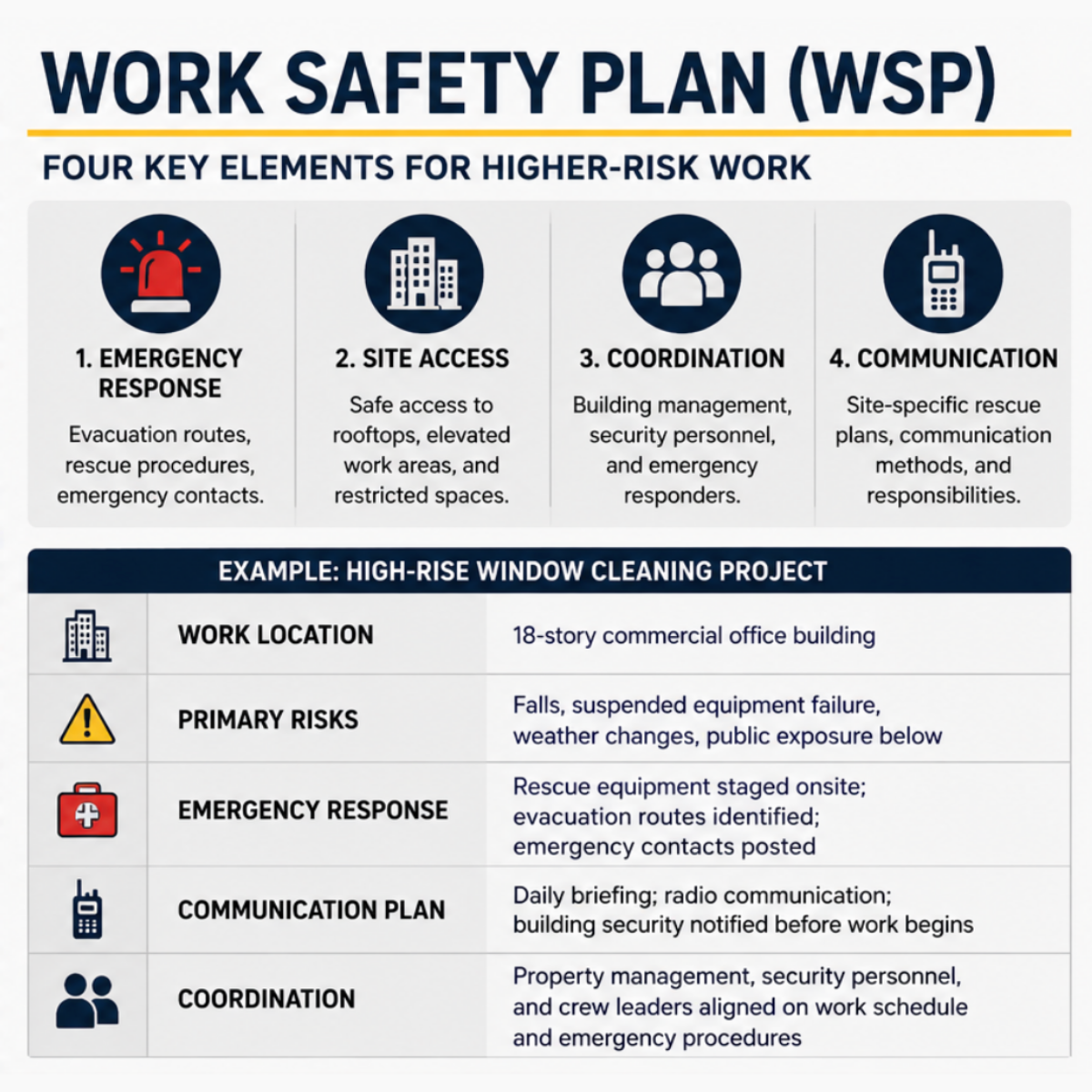
For larger or higher-risk jobs (especially commercial or high-rise work), a more detailed Work Safety Plan is often required. This expands on the JHA by including:
- Emergency procedures and evacuation routes
- How to reach the roof or elevated areas safely
- Coordination with building security or emergency response teams
- Site-specific rescue plans and communication protocols
The Work Safety Plan ensures everyone knows not just the hazards, but exactly how to respond if something goes wrong.
The OSHA Connection (Without the Headache)
OSHA 1910.132(d) requires hazard assessment and written certification. OSHA 1910.1200 requires clear hazard communication to employees. Preparing JHAs during bidding and reviewing them on site (along with detailed Work Safety Plans when needed) is a practical way to meet both requirements consistently. It also supports PPE selection, fall protection plans (1910.140), and overall safe work practices.
Why This Pillar Works So Well in the Real World
- Saves time by planning risks and communication upfront
- Gives every team member a voice during the onsite review—newer workers often spot important details
- Creates a clear written and verbal record for audits or claims
- Builds confidence—teams that discuss the plan together are far more likely to follow it
How Safety Advocate Makes Jobsite Hazard Communication Easy
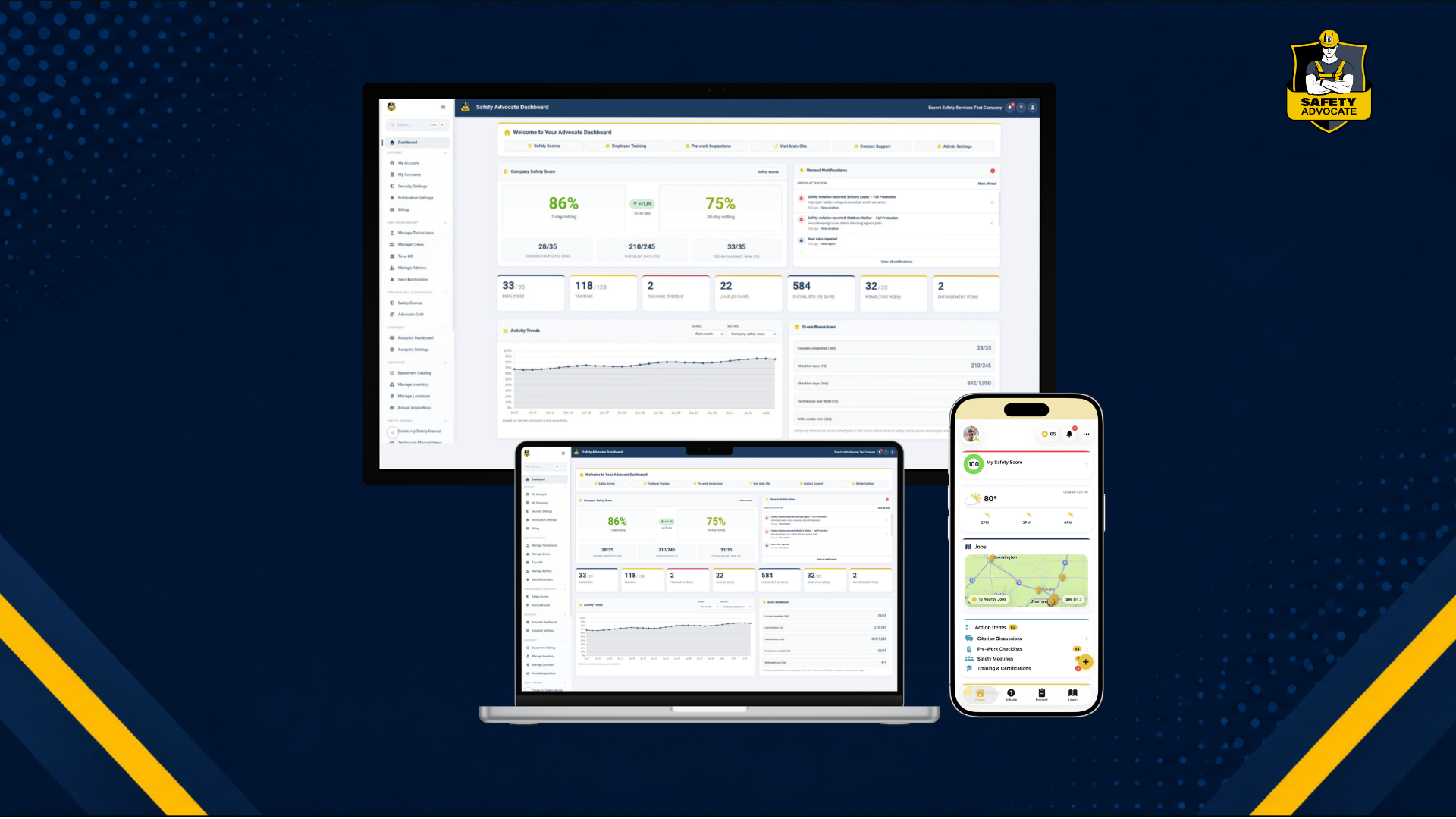
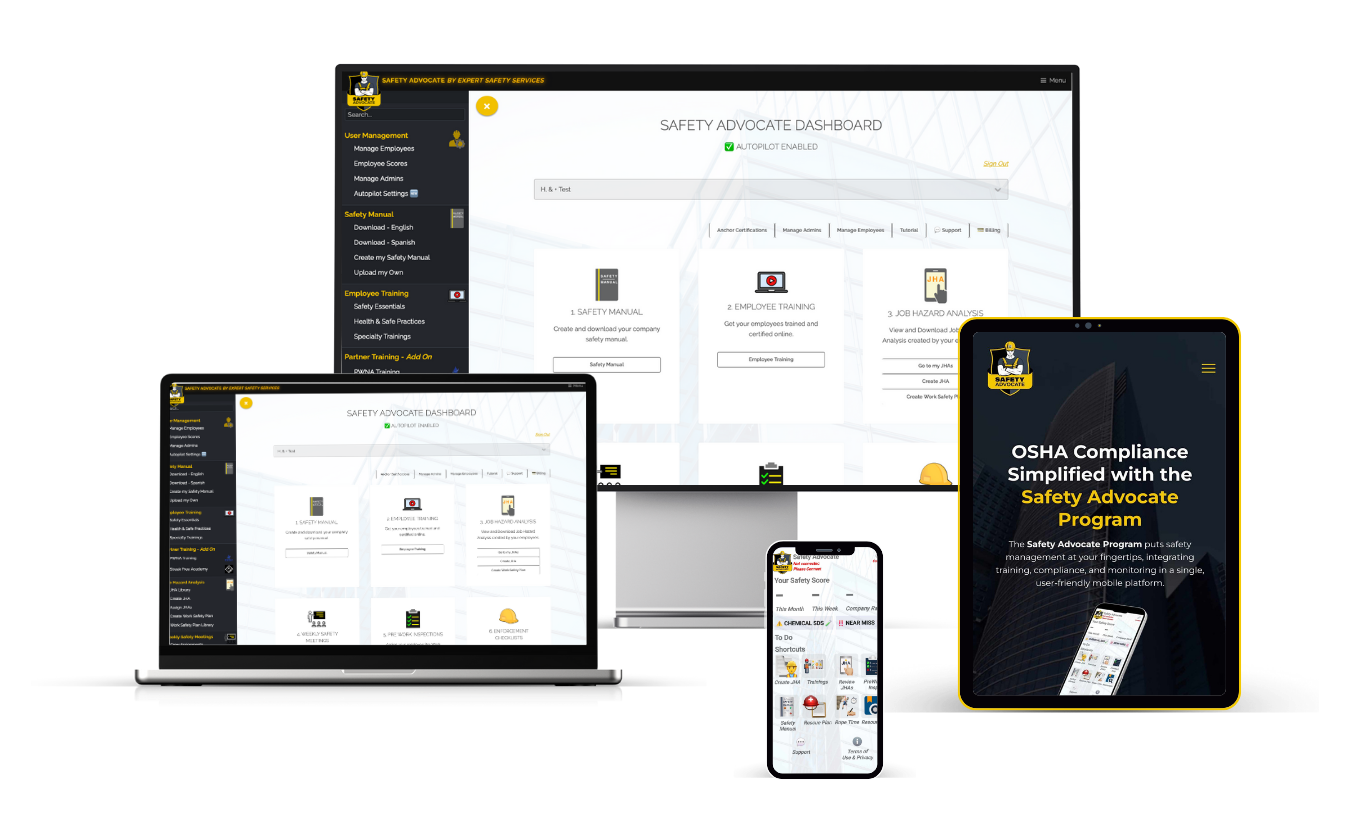
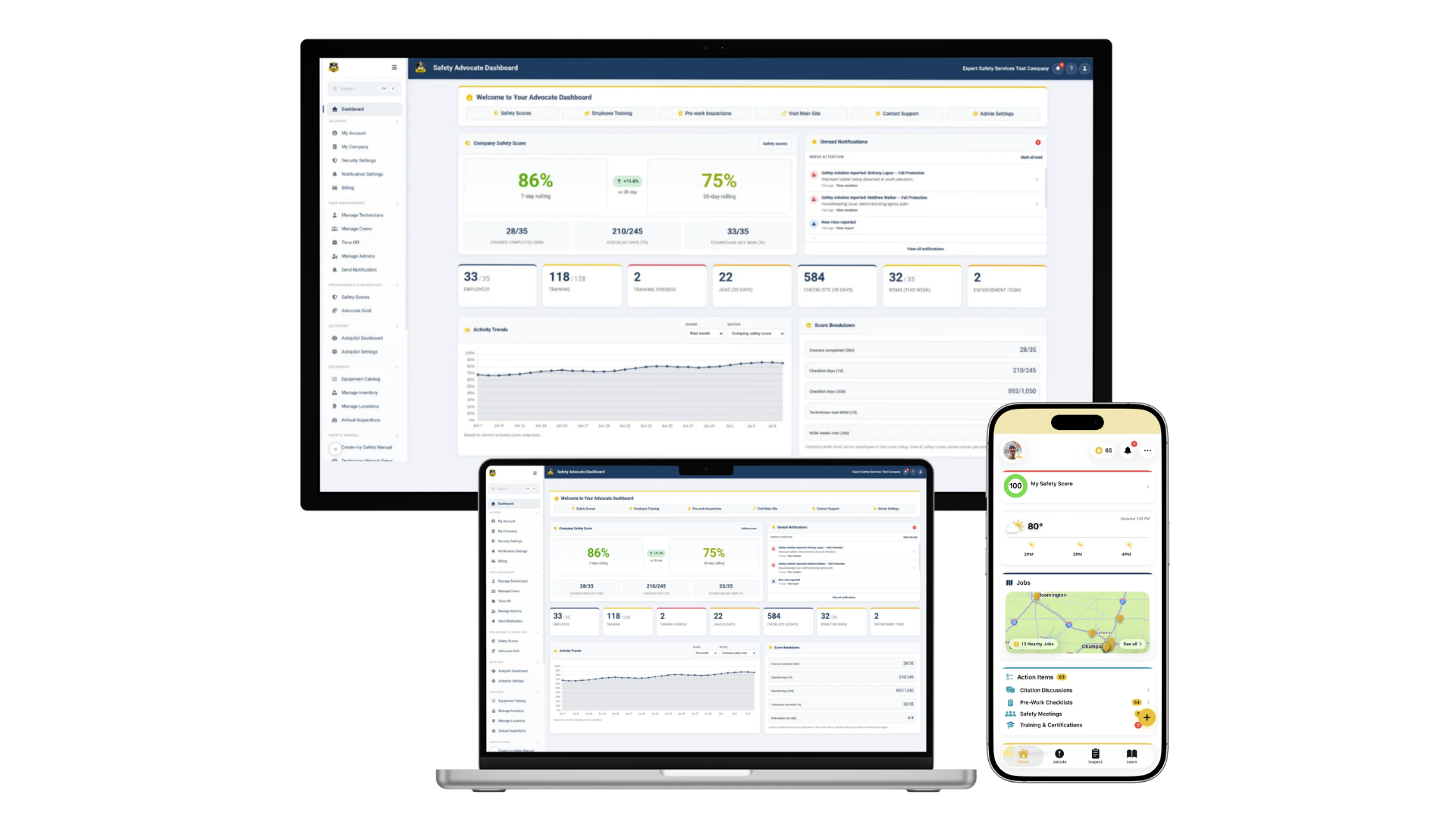
The Safety Advocate app streamlines the entire process so you can focus on the work, not the paperwork.
Here’s how it works in practice:
- Generate quickly during bidding or planning — A qualified person inputs or selects hazards. The app automatically creates a tailored JHA (and Work Safety Plan when needed) with exposures, mitigation steps, and communication notes—ready to attach to bids or share with clients.
- Keep it concise and user-friendly — Forms are designed to fit perfectly on a phone screen with only the essentials.
- Add visuals for clarity — Built-in pictures and icons make hazards and controls easy to understand (especially helpful for multilingual teams).
- Instant bilingual access — The system automatically translates everything into Spanish (or provides both languages), so every employee can clearly understand the plan.
- Automatic logging and sign-off — When the team reviews the JHC on site, completions are logged automatically—no manual signatures needed.
- Centralized storage — All JHAs and Work Safety Plans are securely stored by date and job, making audits, claims, or future bids much easier.
The app also allows instant sharing with clients, supervisors, or the full team—making communication seamless from bid to completion.
This mobile-friendly approach turns Jobsite Hazard Communication into a low-effort, high-impact habit. Safety shifts from feeling like extra paperwork to becoming the natural, intelligent way to get the job done. Over time, this leads to fewer close calls and incidents, higher team morale, and a workplace where safety feels like the obvious, everyday choice.
Up Next: Pillar 4 - Weekly Safety Meetings that keep safety conversations alive and skills sharp without becoming a burden.
This blog post is for informational purposes only, explaining the Safety Advocate Program. It is not legal advice or compliance guidance.
Contact us today to learn more about the Safety Advocate Program.
Contact Us
Featured Articles
This blog post is for informational purposes only, explaining the Safety Advocate Program. It is not legal advice or compliance guidance.